Loblaw Companies Limited is one of the biggest retailers in Canada with over 2,400 stores across Canada – owns well-known brands such as Loblaws, Shoppers Drug Mart, No Frills, Real Canadian Superstore, Zehrs or T&T Supermarket.
Advertisement:
In it’s most recent food inflation report it states that inflation continues to moderate, and January was deflationary due to food purchased at restaurants and the impact of the removal of GST.
Customers at the register continue to find ways to lower prices, including buying more items on sale, and substituting for less expensive brands or products, but the weak Canadian dollar (CAD) is a present and growing concern.
With the Canadian dollar is at its lowest level in 20 years, there is a lot of pressure on new food purchases, which will flow through in higher food prices, especially during the winter for imports such as fresh produce. Because most fresh produce is priced in U.S. dollars, a weaker loonie means higher costs for grocery essentials like lettuce, tomatoes, and avocados.
Loblaw said the currency impact extends beyond produce. Many food products have an underlying commodity exposure, like coffee, wheat, vegetable oil or sugar, that are purchased and sold in USD on the International Markets, and suppliers continue to pass on their higher costs.
Some commodity prices had increased a lot in recent months, with coffee going up by 81%, while cocoa is up 144% in the last year alone, while for olive oil the price is down by 54% YOY, after production rebounded after recent shortages and price increases.
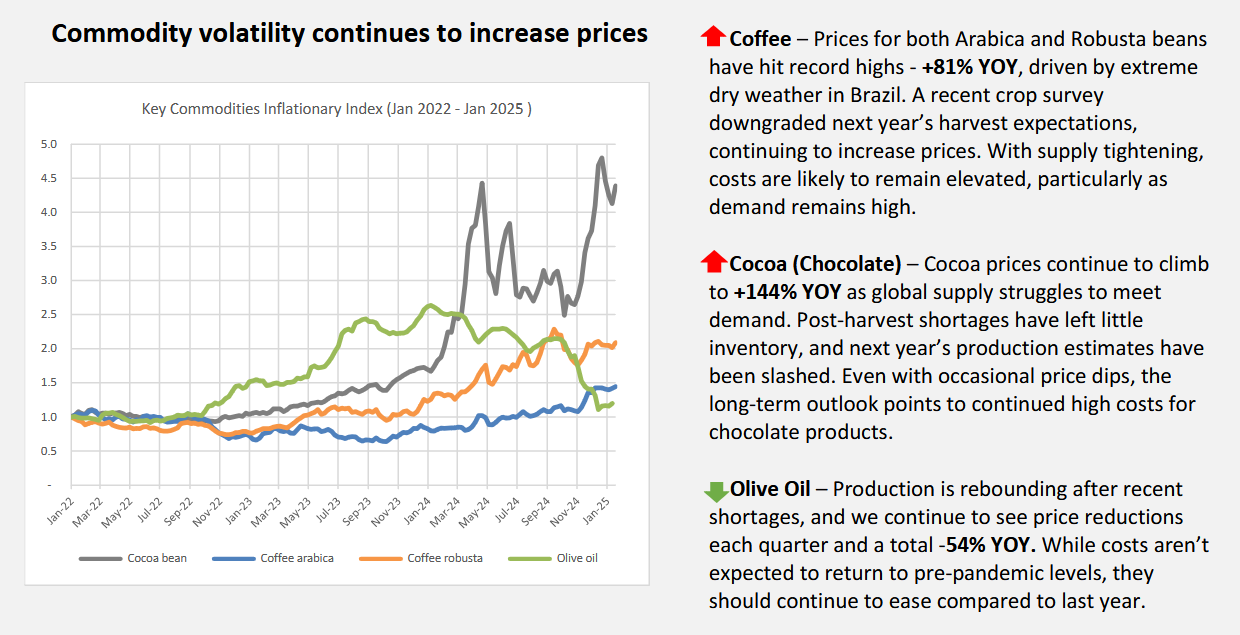
Image: Loblaw Report
Post-harvest shortages for coca have left little inventory, and next year’s production estimates have been slashed. Even with occasional price dips, the long-term outlook points to continued high costs for chocolate products.
In addition, more Expensive U.S. Imports because of the 25% U.S. tariff tax will mean higher prices for consumers this year, and higher input costs for Canadian producers. Canada is the 2nd largest market for U.S. agricultural exports, importing more than $20 billion every year. The U.S. supplies about two-thirds of Canada’s vegetable imports, one-third of fruit imports, and over half of Canada’s beef imports.